Leandro Rolon is an architect and entrepreneur. Over the years, he has designed various residential and commercial buildings, especially in Asia. His latest creation, which I visited with him, is one of his most impressive. This modern luxury residence is made up of a public area on the ground floor and a private section upstairs. It is here that he intends to receive his family and friends for intimate discussions, but also clients to show them the models of the other houses that he plans to design and – at least that is his wish – to sell.
“I opted for a realistic style. Here, I don’t need to worry about the laws of physics, but I wanted visitors to feel in the real world,” the Miami architect explains to me.
As you will have understood, the house is digital, and Leandro Rolon hopes to live there virtually in the metaverse, these series of virtual universes where the big tech companies predict that one day we will spend part of our lives, whether for work, have fun or, of course, consume.
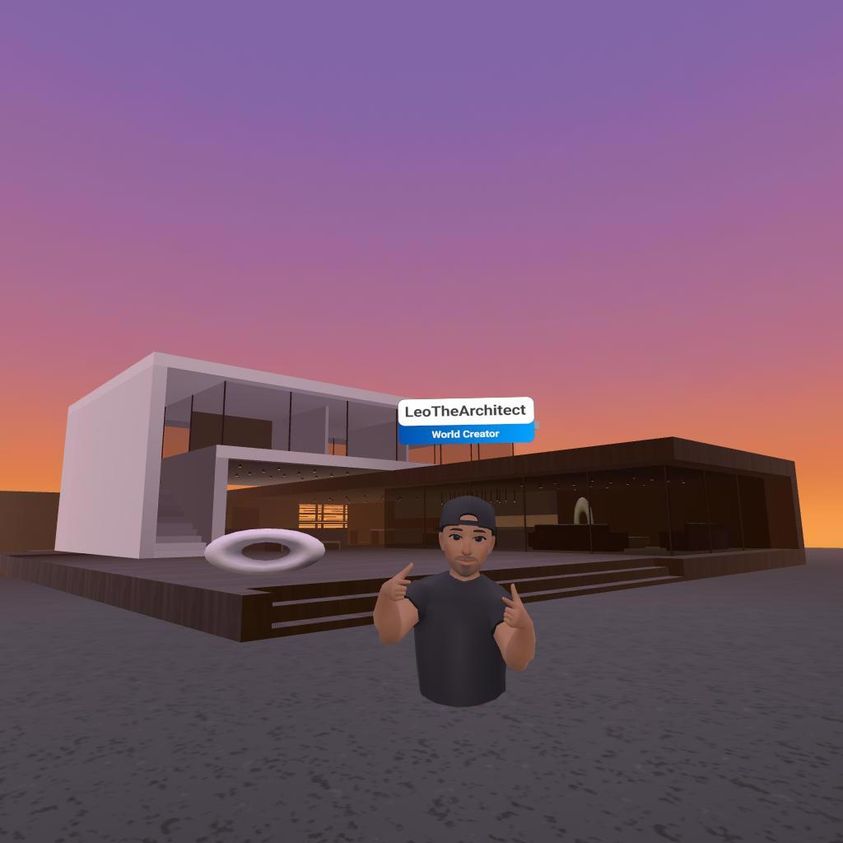
I could have interviewed Leandro Rolon by videoconference, but as long as I meet an “architect of the metaverse”, I might as well do it in his creation. This is well established in Horizon Worlds, software from Meta (Facebook’s new name) for the Oculus Quest 2 virtual reality headset. The application provides access to thousands of different worlds, such as games or chat rooms. Some are created by Meta, and others by users like me. The concept is somewhat reminiscent of Roblox, which also allows you to design games and online worlds.
Virtual reality is not ideal for an interview. I can’t take notes with a headset on my head, and the simplistic 3D avatar of my interlocutor doesn’t allow me to decipher his intentions or his emotions. But such a meeting is still warmer than a telephone conversation, for example, perhaps because of the sound that comes from the direction of our interlocutor, as in real life, because we can express certain emotions by moving our hands, that we can « walk » while speaking or that we can feel the gaze of the other when their virtual eyes are looking at us.
Not (yet) the real metaverse
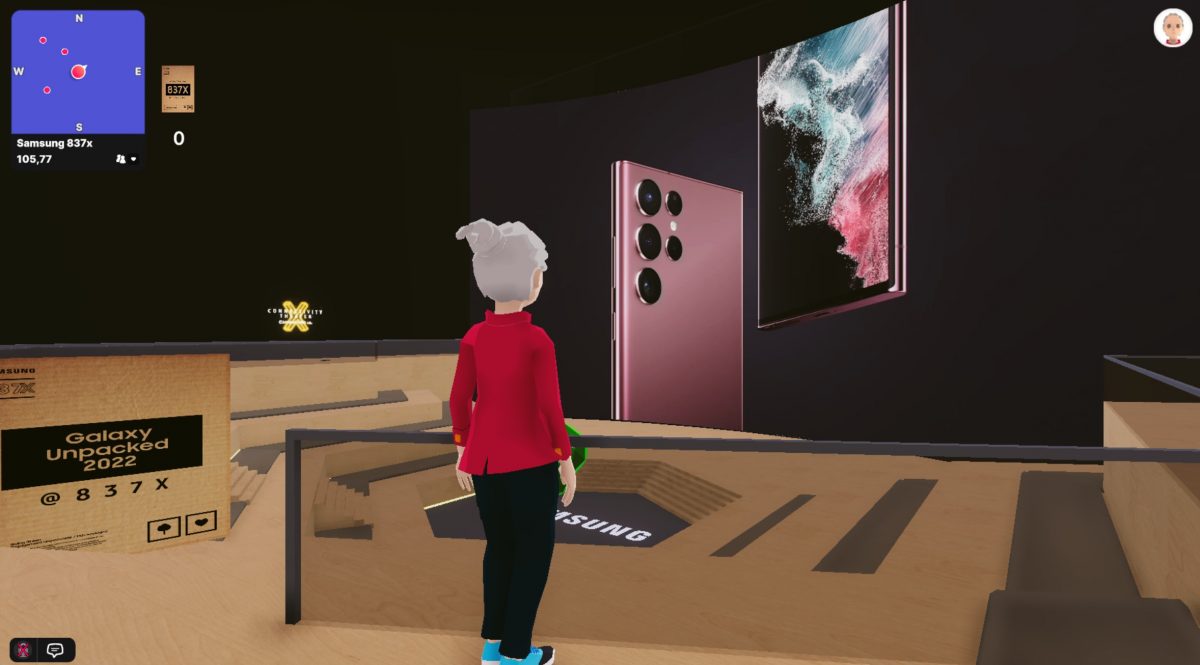
Meta does not present Horizon Worlds as being the metaverse, but rather as a precursor. According to Mark Zuckerberg’s company, the metaverse will notably benefit from more advanced technology, with more realistic avatars, and will include a real economy, which will one day allow Leandro Rolon to sell his virtual residence, which he cannot not do for now.
Some also hope that the metaverse of the future will be more open and interconnected. This way, the avatar that I created to represent me in Horizon Worlds will be able to follow me in Roblox or Fortnite, for example.
Many companies do not hesitate to use the term “metaverse” to define their current virtual universes. At the beginning of February, the alternative broadcasting festival Le Phoque OFF organized a press conference « in [son] metaverse » to present the program for its 2022 edition. On the Nowhere platform (accessed with a browser rather than a virtual reality headset), the Quebec festival will offer networking activities, training, conferences, workshops and, of course, shows, all in 3D.
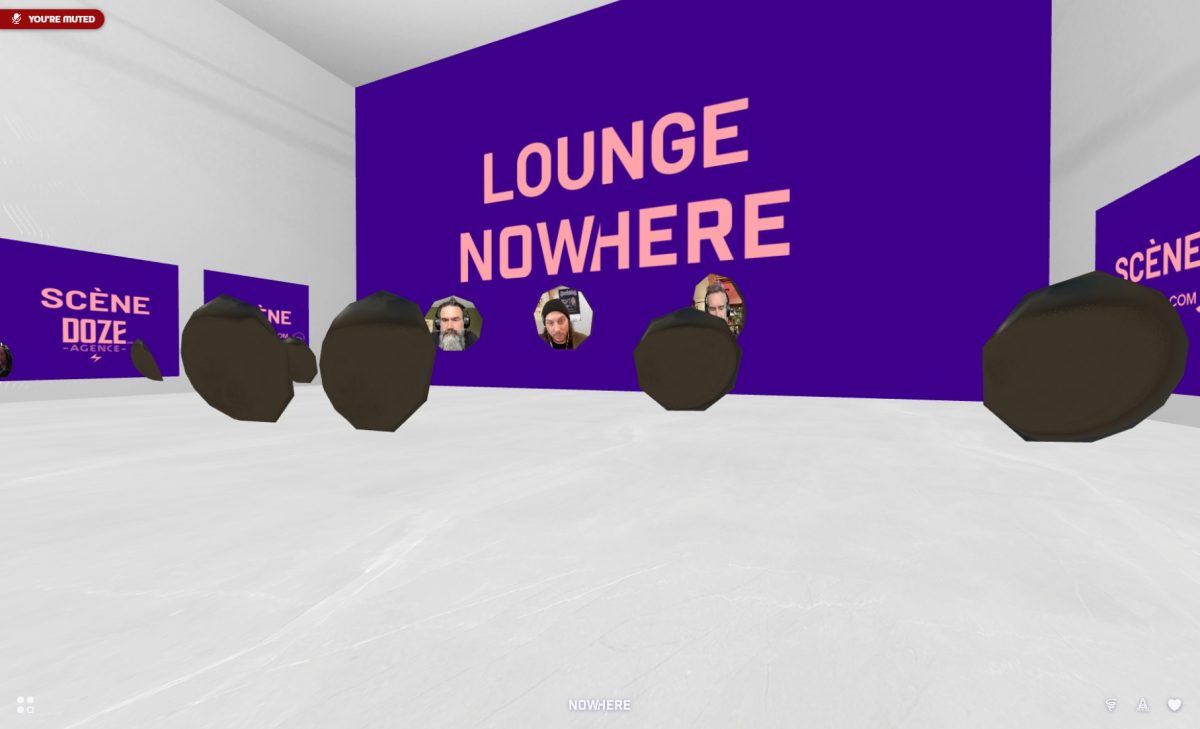
We were about ten journalists at the press conference. The meeting would have been more effective by videoconference (another journalist’s avatar was blocking my view a little, which does not happen on Zoom), but it nevertheless made sense to hold it in the same place as the festival. Maybe it was the simplicity of the room we were in, but in all honesty, I felt more like I was in the modern version of chat software from the late 1990s than the future. That such a meeting took place, however, demonstrates how quickly the metaverse, unknown to most people only a few months ago, has gained credibility.
I did not have the opportunity to attend a show of the Seal OFF, which will take place from February 21 to 25, but I saw another one recently, since the American group Foo Fighters presented a concert in Horizon of Meta following the Super Bowl.
Above all, this show showed the limits of current technology. Only 13,000 participants were able to attend live, while probably many were unable to do so due to technical glitches. For a concert announced as part of the biggest sporting event of the year in the United States, it’s not much. For those who were there, however, it was quite successful. We walked around with our avatar in the equivalent of a VIP box, with about fifteen other spectators at a time. Singer Dave Grohl, caught on 180-degree video, looked larger than life on the stage right in front of us.
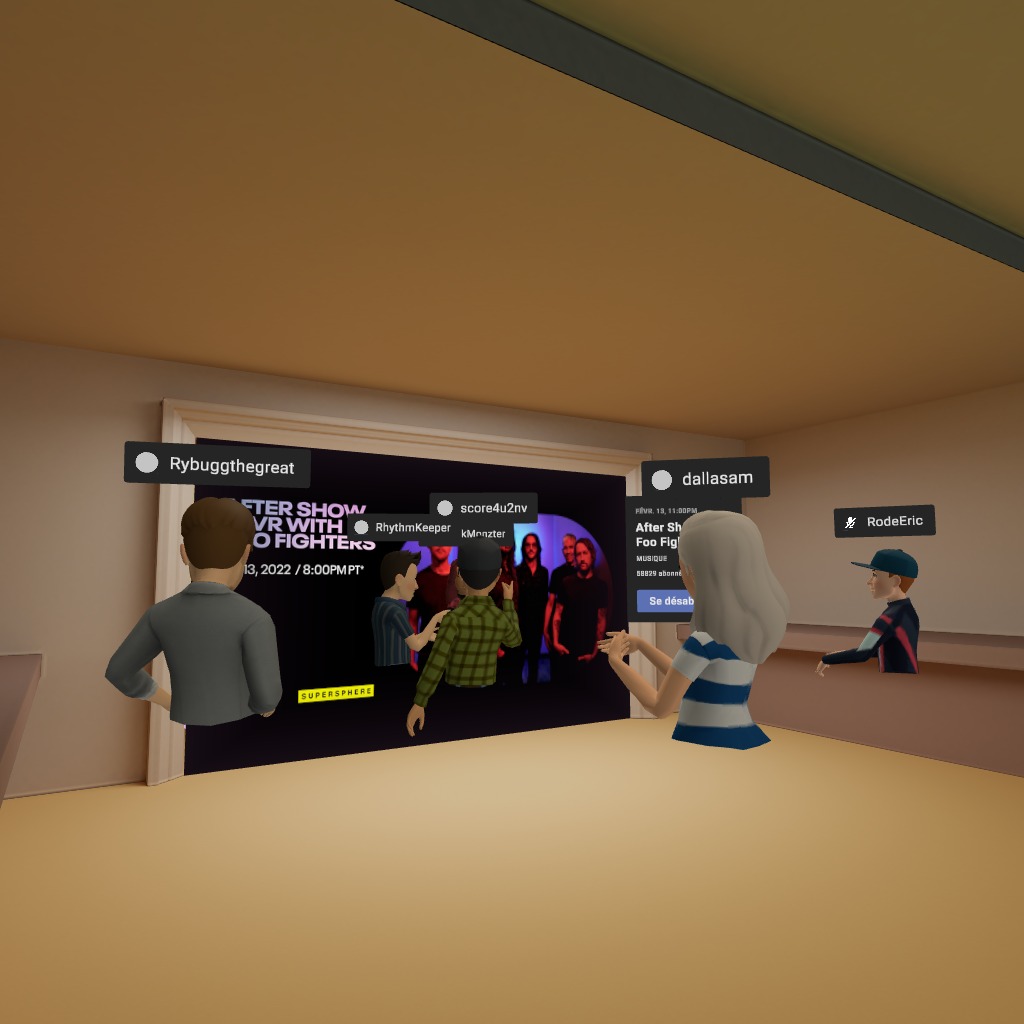
Was the 45-minute concert better for people surrounded by other VR avatars than it was for people who just saw it in 2D on Facebook Live? I think so. I had a little more the impression of attending a real concert than if I had watched it on my computer.
Moreover, even before the show, the simple fact of waiting in a virtual hall in front of the door of the dressing room and chatting with other people around me contributed to giving a certain impression of realism to the event. From there to say that it could one day replace an outing in the flesh, there is however a step that I would not dare to cross.
What the metaverse will replace (or not)
The observation is also the same for all the other activities in which I have participated in these virtual worlds over the past few days. Each time, the same activity would have been preferable in real life.
Someone has created a virtual house in Horizon Worlds to party around the clock, for example, with loud enough music and even a table of beer pong. I wouldn’t replace a night out with friends with that, but those who were there and fit in with the group still seemed to be having fun. Probably more than if they had remained glued to Instagram or Twitter. It should be noted that during my visit, a visitor was shown the door by the other participants following a vote. I didn’t witness the interaction that caused the argument, I was elsewhere in the house, but the incident was a good reminder that moderation in the metaverse won’t be easy.
Critics of the metaverse believe it will never replace the real world. After a week of exploring different virtual universes, I tend to agree with them. The technology is still in its infancy, but no realistic avatar, no server capable of hosting 10,000 people rather than 12, no effective moderation, and no perfect 3D house will beat human contact.
The metaverse, however, does not need to replace real life to be successful. According to surveys, Canadians spend up to 11 hours a day in front of a screen, whether it’s their phone, computer or television. Our daily lives have already been turned upside down by technology. The metaverse will be just one more screen, with uses to be defined, which will replace part of the time we spend in front of our other electronic devices. For many people I have met virtually this week, this transformation has already begun.
#week #metaverse