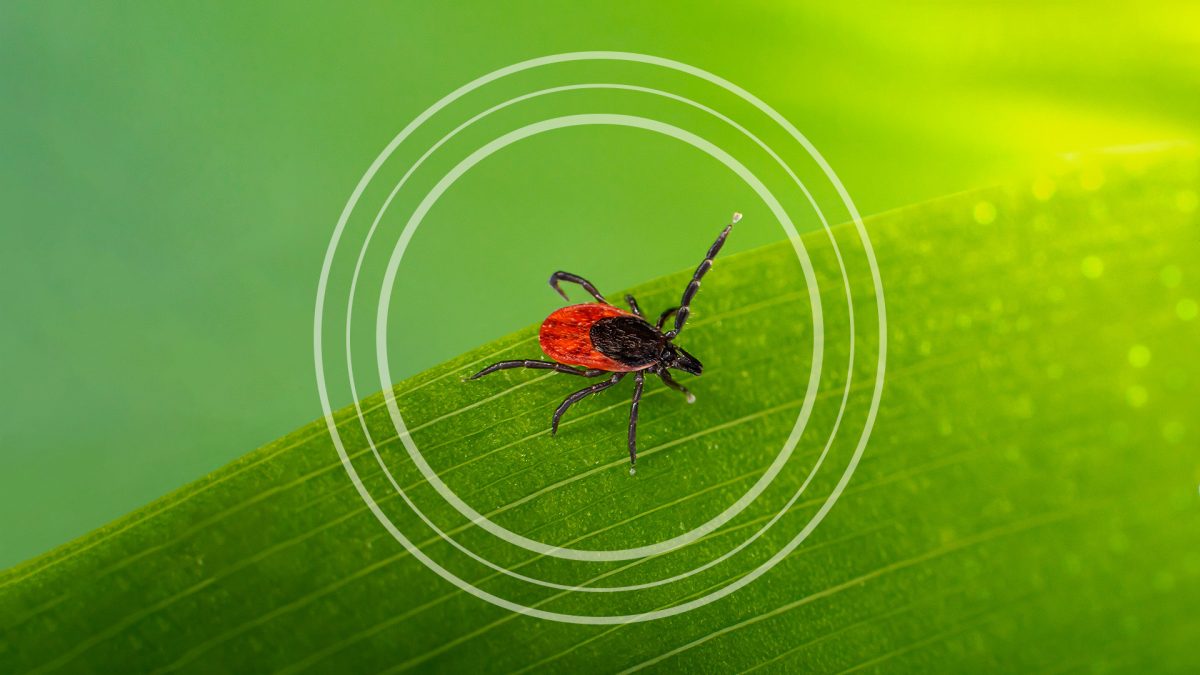
Blacklegged ticks, known in Quebec as “deer ticks”, are no longer confined to Estrie and Montérégie. Walkers come across more and more of them in more northern regions, according to a recent INSPQ report. Sometimes even as far away as Gaspésie and the North Shore, where they arrive hooked to birds! And while these little critters can carry the bacteria that causes Lyme disease, they can also harbor several other disease-causing microorganisms that public health authorities are monitoring.
When they tested the blood of more than 1,000 patients in New England, scientists at Yale University in Connecticut detected antibodies against Borrelia miyamotoi, a bacterium that can cause recurring fevers and is spread by ticks. Since it is not a reportable disease in Quebec, the number of cases is not known, but the bacterium was detected in 0.4% of all ticks analyzed by the INSPQ – in collaboration with the National Microbiology Laboratory in Winnipeg — since 2006.
The American researchers also found, in the blood of 10% of the participants in their study, antibodies against Babesia microti, a parasite transmitted by ticks. This can cause babesiosis, an infection that gives flu-like symptoms, but which has not yet been detected in humans in Quebec.
The INSPQ is interested in two other diseases that can be transmitted by ticks, Powassan encephalitis and anaplasmosis. The latter also affected several Estriens in the summer of 2021, mainly in the city of Bromont, according to a study carried out by the Public Health Agency of Canada, the University of Sherbrooke and the Public Health Department of the ‘Estrie. Of the 25 confirmed cases, 11 required hospitalization. In addition to outdoor activities, gardening and lawn maintenance are cited as particularly at risk.
To take stock of diseases transmitted by ticks in Quebec, News interviewed two authors of the INSPQ report: Najwa Ouhoummane, epidemiologist at the INSPQ, and Karine Thivierge, head of the parasitology laboratory at the Laboratoire de santé publique du Québec.
Are ticks found everywhere in Quebec?
Najwa Ouhoummane: The data from our surveillance program allows us to have a very good idea of the presence and progression of ticks. The species responsible for the transmission of Lyme disease, Ixodes scapularisis present everywhere in Quebec today, with the exception of the most northern regions: the Cree territories and Nunavik.
The probability of being bitten by a disease-carrying tick is higher in regions endemic for Lyme disease, such as Estrie and Montérégie and several other sectors, as can be seen on the interactive map produced by the ‘INSPQ. But the risk exists even in the most remote territories, where one is exposed to « adventitious » ticks, that is to say which have been transported there by migratory birds, but which cannot establish themselves there, lack of a favorable environment for long-term survival or reproduction. It is therefore necessary to protect yourself everywhere when walking in the vegetation.
How are ticks progressing in Quebec?
Karine Thivierge: Different conditions are necessary for ticks to become established in an area. At each life stage, be it larva, nymph or adult, the tick must bite a host in order to feed. The larvae and pupae tend to bite small animals like mice. And that’s how they can be contaminated by bacteria or parasites. The main reservoir of pathogens responsible for Lyme disease, babesiosis and anaplasmosis is the white-footed mouse. It is very much through this species that the tick becomes a carrier of these diseases. The presence of deer is also important for the establishment of ticks in an area, because they serve as a kind of meeting place between males and females for reproduction. If elements of the cycle are missing, ticks can find themselves in an area without being able to establish themselves there permanently, which reduces the risk of a bite.
NO: Tick populations are expected to move further north as climate and environmental changes cause more and more areas to become favorable for their establishment. Predictive models show that ticks move 30 to 50 km per year. With the lengthening of the hot season, they are also active over a longer period and humans are therefore more exposed to them, which increases the risk of contracting a disease.
Do all ticks cause disease?
KT: As part of our surveillance program in Quebec, we receive a dozen species of ticks in the laboratory. Some of them, like the rabbit tick, do not give any disease. Others may carry disease, but have no tendency to bite humans. This is the case ofIxodes cookei [NDLR : la tique de la marmotte], which stays in burrows or under sheds, for example. We also find Dermacentor variabilis [NDLR : la tique américaine du chien], a species known to transmit Rocky Mountain spotted fever, but the pathogen responsible for this disease is absent in Quebec. To differentiate the species, the INSPQ has produced an identification guide for doctors and veterinarians.
NO: And even at Ixodes scapularis, the species that can transmit pathogens in Quebec, not all ticks are carriers. Between 2003 and 2019, an average of 17% of these ticks were positive for Borrelia burgdorferi, the bacteria that causes Lyme disease. However, this proportion is higher in areas endemic for Lyme disease. We also observe a slight increase over time in the proportion of ticks infected with this bacterium, which peaked at 23% in 2019. The percentage of ticks infected with another pathogen is much lower: for example, only 2% are carriers of the bacteria responsible for anaplasmosis.
Have we ever heard of cases of disease in Quebec due to these other pathogens?
NO: Currently, the number of reported cases of these diseases remains low in Quebec. For anaplasmosis, we have nevertheless noted an increase over the past year. Estrie has also reported 35 probable cases in the summer of 2021, out of a total of 47 in the province. By comparison, in 2019 and 2020, there were only 4 cases. An increase in the proportion of ticks positive for the bacteria responsible for anaplasmosis has also been noted over time, a trend similar to what is happening in the other Canadian provinces and bordering states south of Quebec.
Since 2019, there have been no reported cases of babesiosis or Powassan encephalitis in Quebec. In addition, since 2009, there have been very few positive ticks for the pathogens responsible for these two diseases.
How to protect yourself?
KT: One of the most effective ways to prevent disease transmission is to inspect your skin after returning from an activity in a risk area to detect the presence of a tick. For Lyme disease, if the tick is removed with tweezers within the first 36 hours, the risk of transmission is almost nil.
Even though ticks are active from spring to fall, the risk of catching a disease is higher during the summer, particularly because people tend to be less dressed. It is therefore necessary to encourage the wearing of long clothes. You can also use certain insect repellents that are effective against ticks, such as those based on DEET or icaridin.
#Ticks #spread #diseases #Quebec