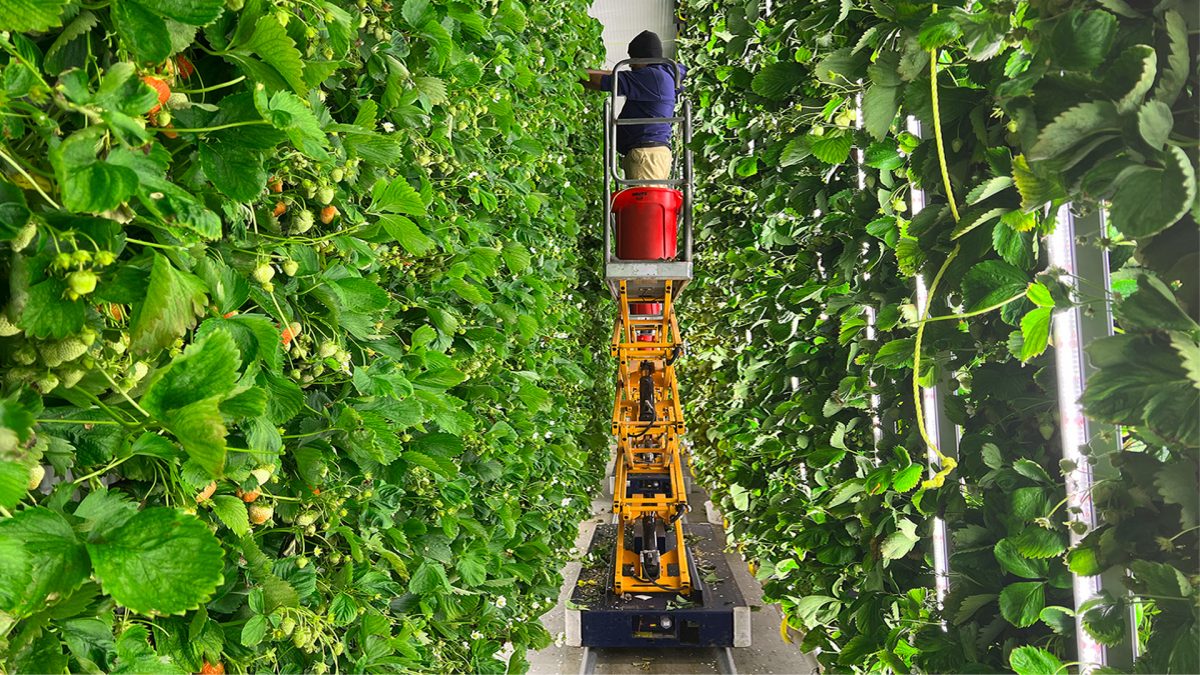
There is something both futuristic and bucolic about visiting the vertical farm Ferme d’hiver, in Vaudreuil-Dorion, near Montreal.
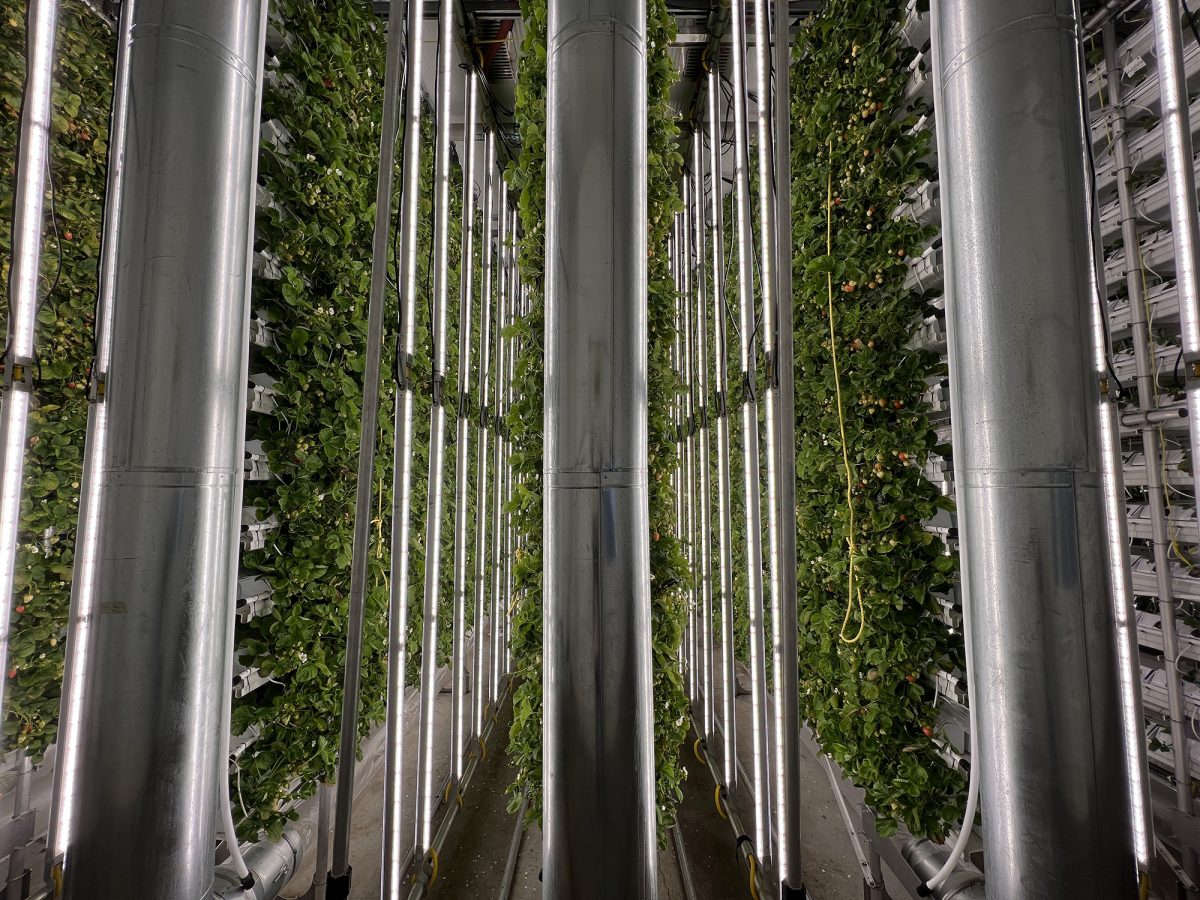
Eleven giant panels covered with strawberry plants up to the ceiling. Algorithms created in collaboration with Quebec universities that will soon automate all production. LED bulbs that illuminate the room like a summer sun. It all sounds like a farm in a sci-fi movie. But the bumblebees pollinating the plants, the little artificial wind and the sweet strawberry that I just picked make me feel more like being in a field on a perfect summer day. It’s that everything on this farm is designed to replicate an optimal day for growing strawberries, even when it’s snowing outside.
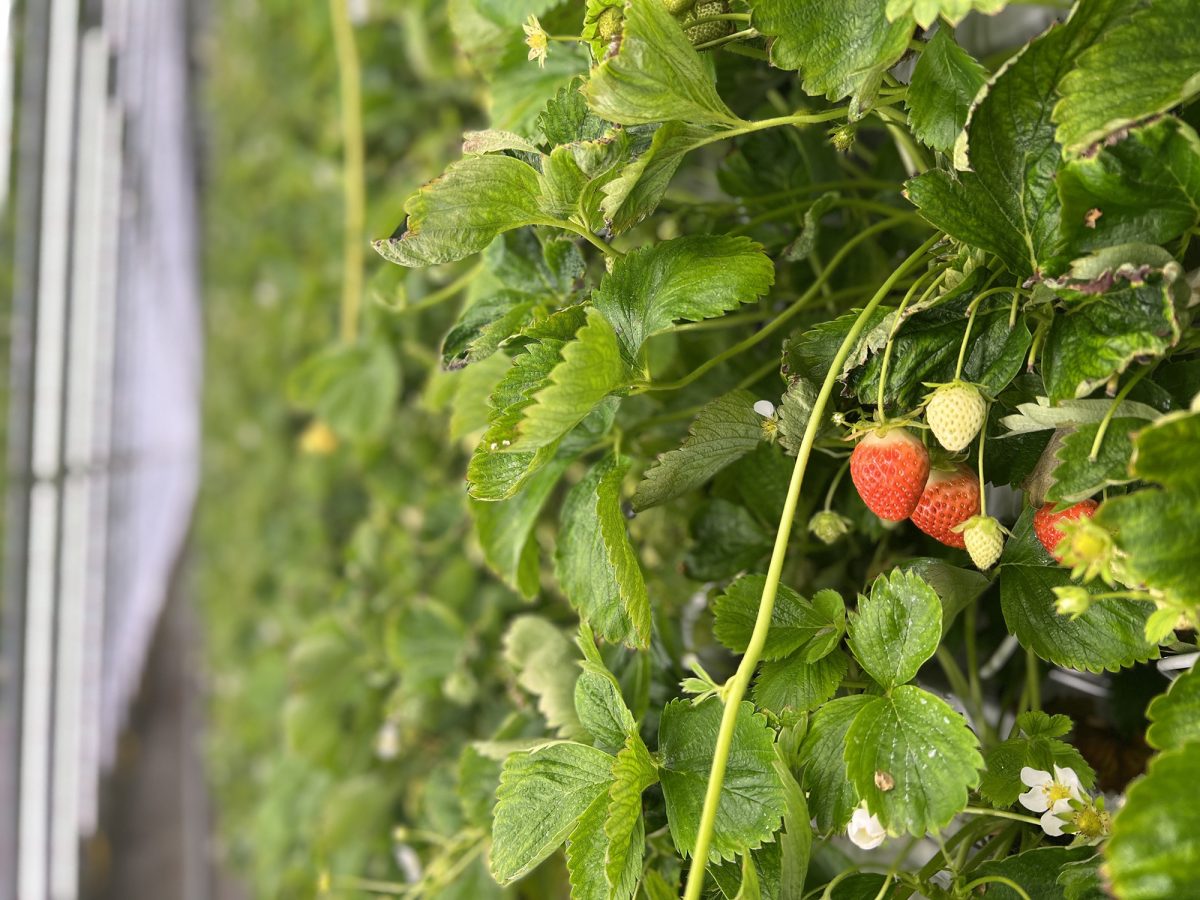
The facility is the first industrial farm of Winter Farm, an agritech start-up founded in 2018. The 770 baskets of strawberries that were picked the day before my visit, and which cost a little more than the imported strawberries sold at the discounts in supermarkets, are already on the shelves of grocery stores. And if management’s plans come to fruition, other vertical farms should enable the company to replace 10% of Canada’s strawberry imports, or more than 13 million kilograms. These farms could also be used to grow other foods, such as mushrooms.
The choice of strawberries as the first crop for Winter Farm is no coincidence. “Strawberries are an emblem of Quebec and grocery stores sell a lot of them. But it is also one of the most contaminated fruits,” explains Yves Daoust, the company’s founder and chief operating officer. The Californian and Mexican strawberries that flood the market in winter must also travel thousands of kilometers in refrigerated trucks that emit greenhouse gases before arriving here.
When Winter Farm offered Sobeys (the company behind the IGA brand) a local, pesticide-free and carbon-neutral alternative, the supermarket chain approved the purchase of millions of kilos of strawberries.
“That’s what allowed us to obtain funding and launch the project,” notes Yves Daoust.
Towards the automated farm
The company expects its vertical strawberry cultivation to take a tech turn over the next few years, with the development of BRAIN, an artificial intelligence-based system for which Ferme d’hiver recently secured funding from Sustainable Development Technologies. Canada (SDTC), and which will be developed in collaboration with the University of Montreal, the École de technologie supérieure (ÉTS) and HEC Montreal.
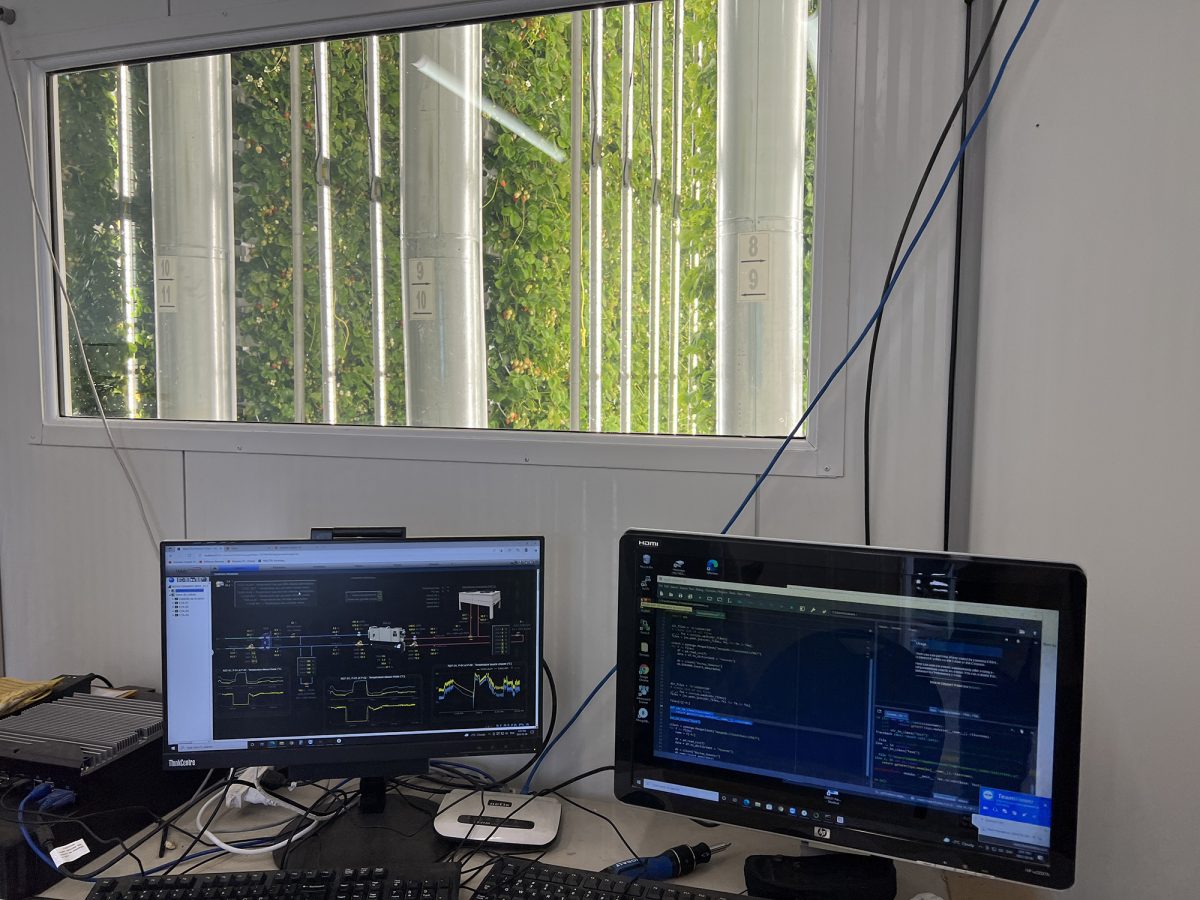
“Everything is controlled on the farm, nothing is natural. We have to recreate the wind, sunrise, light energy and watering”, explains Yves Daoust. For now, all of its systems are isolated and manually controlled, in a room adjacent to the farm.
These systems will be modeled and digitized, first in a « digital shadow », which will allow simulations to be created (to optimize the production of strawberries by predicting the effect of a change in lighting on the growth of the fruit, for example ), then in digital twins, virtual versions of the vertical farm thanks to which it will one day be possible to automatically control its various systems.
« To my knowledge, this is the first time that such a biocyberphysical system will be developed for agriculture, » says Houari Sahraoui, professor in the Department of Computer Science and Operational Research at the Université de Montréal and responsible for the digital twins.
“It will allow us to study scenarios, and instead of carrying out the tests on the plant and waiting four or five weeks to obtain the result, we will be able to do a simulation in a few seconds”, he continues.
In a few years, BRAIN and its digital twins should therefore improve the production of strawberries and facilitate the deployment of farms on a larger scale thanks to their automation, which will increase the amount of winter greenhouses at the same time.
Vertical farms in symbiosis with greenhouses
In a greenhouse a few meters from the vertical farm, 15,000 lettuces grow, horizontally this time. Greenhouse winter farming isn’t new, but it’s heated not by fossil fuels as is often the case, but rather by Winter Farm’s vertical farm. The LED bulbs (designed and assembled in Quebec) used to reproduce solar energy are in fact cooled with water, and a heat pump then extracts the heat.
“We recover all the heat produced on the farm and use it to heat the adjacent space, which belongs to a partner market gardener. A market gardener can therefore grow tomatoes, lettuces, cucumbers or eggplants. This allows him to reduce his energy costs and produce in larger quantities,” says Yves Daoust. Each vertical farm can heat four times its greenhouse area.
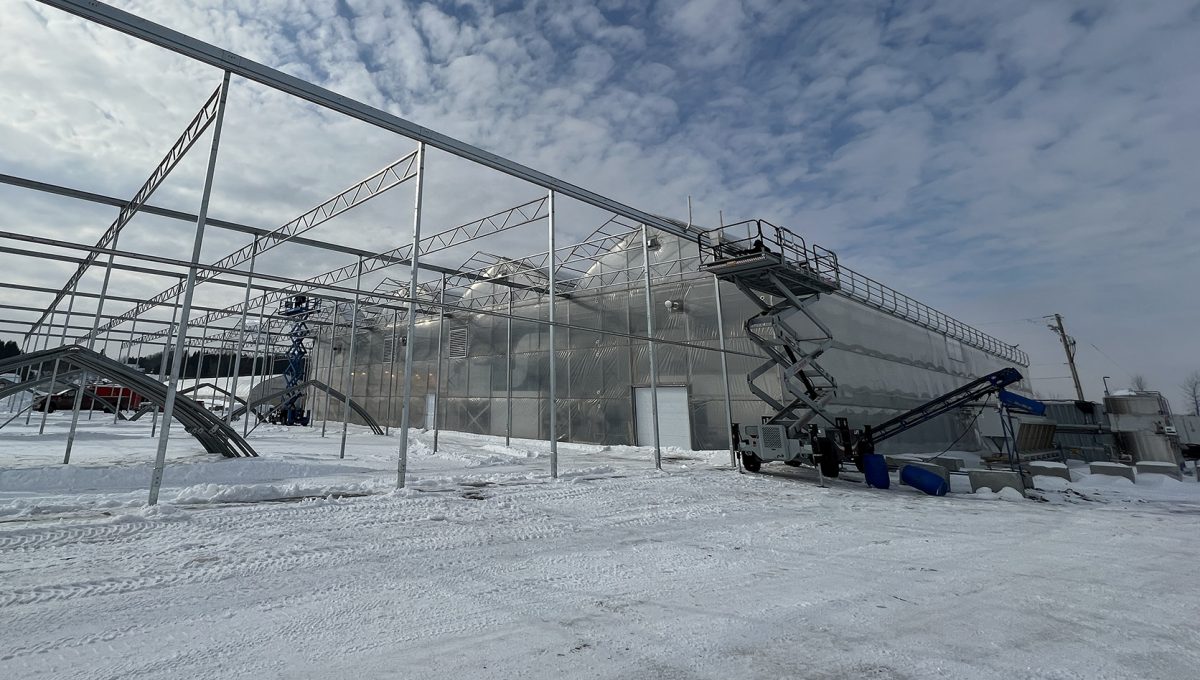
This symbiosis is at the heart of Ferme d’hiver’s business model. This is not yet the case here, in Vaudreuil, but the vertical farms of Ferme d’hiver will be exploited so that it is always daytime in at least one of them (as strawberries are subject to the same conditions as in nature, a day-night cycle is artificially reproduced on the farm). This will allow the greenhouses of the partners to be warmed 24 hours a day; in winter at least, since Winter Farm takes a break during the summer.
It is therefore not only strawberries that can be produced locally in winter with such technology, but all kinds of fruits and vegetables, some of which have so far been too expensive to grow in greenhouses during the cold season.
“Our objective is to contribute to the implementation of an industrial market gardening production network,” explains Yves Daoust. Quebec already exports to the entire northeastern United States in the summer. We could also harvest during the winter and deliver a wide variety of fruits and vegetables to distribution centers as far away as Washington and Philadelphia,” says Yves Daoust.
After all, the people of Philadelphia probably don’t like Mexican winter strawberries any more than we do.
#Algorithms #transform #winter #farming