High blood pressure, enemy number one
In 80% of cases, when kidney failure is detected, it is accompanied by high blood pressure. A disorder that can be both the cause and the consequence. Indeed, by imposing excessive blood pressure, high blood pressure damages the walls of all blood vessels and organs. Over time, if nothing is done, some damage, such as damage to the kidneys, may be irreparable. A vicious circle then appears since the kidneys themselves participate in the regulation of blood pressure. Hence the importance of regular monitoring of blood pressure.
If kidney stones or kidney infections (pyelonephritis) rarely go unnoticed as the pain they cause is violent, chronic renal failure is generally much more discreet, especially in the early stages of the disease. Its misdeeds are nevertheless very concrete, since it is defined as “any alteration in the function and or structure of the kidneys having repercussions on health”. Except that two obstacles appear. The first: kidneys affected in this way usually do not cause the slightest pain. Note that the « kidney pain » that makes you wince during certain movements is most often muscle pain, unrelated to the kidneys. As for the second obstacle: the repercussions on health of chronic renal failure also begin in the shadows. “The kidneys are in particular intimately linked to the cardiovascular system. Thus, one of the first consequences of chronic renal insufficiency is the calcification of blood vessels, but these lesions do not cause immediate symptoms », underlines the Pre Sophie De Seigneux, doctor-head of the Nephrology Service of University Hospitals of Geneva (HUG).
Other possible impacts of chronic kidney failure, more or less long term: anemia, high blood pressure, metabolic disorders or accumulation of toxins in the body. If not treated in time, kidney failure can progress to a severe and potentially fatal stage.
Multiple missions
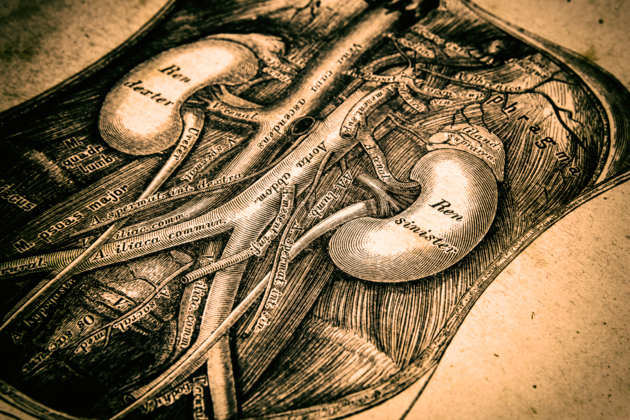
The reason for such consequences? To understand it, take a quick detour through the multiple missions assumed by the kidneys. Behind these two bean-shaped organs nestled under the last ribs, hides a vital purification center. Through the urine they produce, the kidneys eliminate body waste (toxins from cellular processes, in particular), normalize blood concentrations of elements such as potassium and sodium, as well as the volumes of fluids circulating in the body. And that’s not all: they also contribute to bone health through the transformation of vitamin D, the production of red blood cells or the regulation of blood pressure by synthesizing an enzyme, renin.
But the kidneys can malfunction. Major fact: in about 75% of cases, chronic kidney disease is related to more general disorders of the body, such as high blood pressure, diabetes or atherosclerosis. “These pathologies, and therefore kidney failure itself, are very often directly linked to lifestyle. Taking this into account provides access to a major lever for prevention (read framed)”, says Father De Seigneux. For the remaining 25%, the causes are specific to the kidneys themselves: immunological diseases (at the origin of glomerulonephritis), genetic (polycystic kidney disease for example) or even urological (such as urinary reflux).
Know your risk factors
Therefore, what strategies to deal with this disease with multiple causes? « To date, there is no general screening campaign within the population, but kidney function can be assessed quite easily as part of a medical check-up, » recalls the specialist. And to specify: “The assessment is generally established by associating the results of a blood test, a urine analysis and the measurement of blood pressure. This control should be considered regularly, depending on your profile and especially if you have risk factors. Among them: high blood pressure, diabetes, overweight, history of kidney conditions and family history.
What if kidney failure is detected? “The first challenge is to determine the cause and to see to what extent it is possible to treat it, indicates Pre De Seigneux. The second is to assess the exact state of kidney function and the presence of associated damage elsewhere in the body. Support is then made on a case-by-case basis. Most often, two options arise depending on the progress of the disease. “If it is detected early enough, the strategy is to slow down its development, sums up the expert. Since the kidneys are not able to regenerate, it is not possible to go back and “repair” the damaged tissues. But the arsenal of drugs available has been enriched in recent years and the results can be very good, especially if treatment is early. If on the other hand the renal insufficiency is severe, very often, a replacement is essential, by the means of a dialysis or a transplant. “These two approaches are of course not insignificant. Dialysis is an effective but very cumbersome procedure for patients; as for the transplant, it assumes that the state of health of the person allows the intervention and faces waiting times of three to four years on average”, warns the expert. And to conclude: “Like the new drugs available for the early stages of the disease, progress is expected in the coming years for the more advanced stages. Among them: lighter dialysis devices, even implantable in the body, and on the side of transplants, the track of xenografts in particular. The latter, involving the use of animal organs, raise many technical and ethical questions but could constitute real music for the future.
Taking care of your kidneys is everyday!
The needs of our kidneys appear as simple as determining if we take them into account. Overview of the strategies to adopt on a daily basis with Pre Sophie De Seigneux, head physician of the HUG Nephrology Department:
- Adopt a varied, healthy and balanced diet.
- Ensure sufficient daily consumption of fruits and vegetables.
- Avoid excess meat.
- Limit salt intake. For example, by eliminating cooking salt, avoiding re-salting at the table and limiting salt-rich foods (industrial dishes, charcuterie, cheese, etc.).
- Drink enough water. The ideal amount: 1.5 to 2 liters per day.
____________
Published in Le Matin Dimanche on 04/24/2022.
#careful #kidneys #suffer #silence